
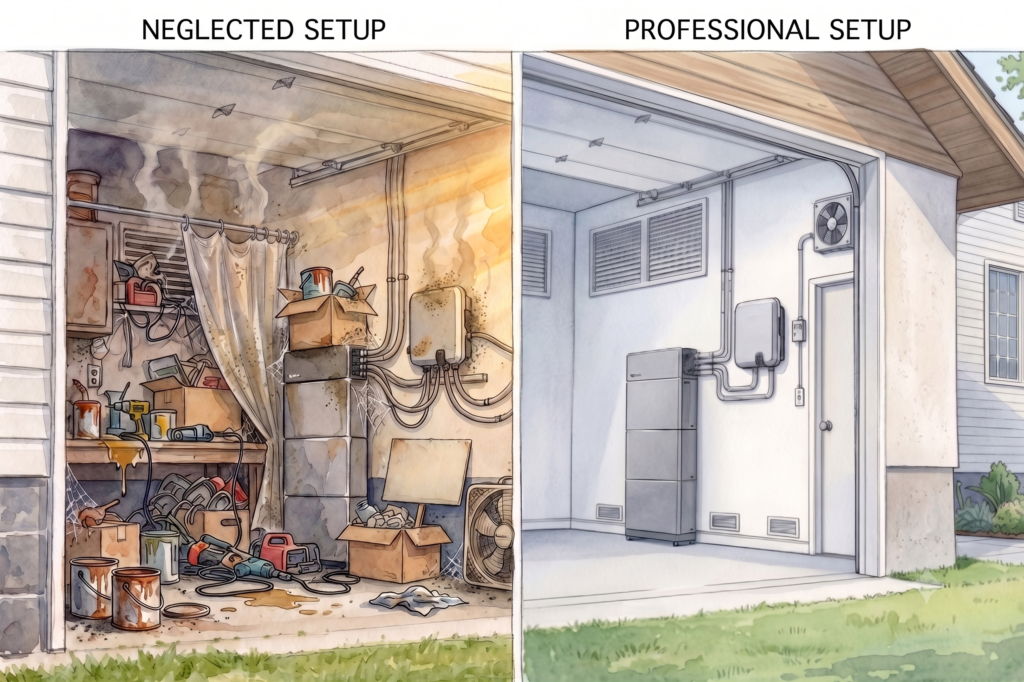
If you have a battery backup integrated with your solar PV system, late summer is the most demanding season it will face all year.
While solar panels bask in the sun to generate power, energy storage units prefer a cool, controlled environment. During the hottest stretches of the summer, high ambient temperatures, intensive daily cycling, and high-load household demands combine to put significant thermal stress on your home battery.
🌡️ The Goldilocks Zone: What Heat Does to Lithium-Ion
Lithium-based home batteries—whether older Nickel Manganese Cobalt (NMC) or modern Lithium Iron Phosphate (LFP/LiFePO₄)—operate best in an ideal temperature range of 68°F to 77°F (20°C to 25°C).
When internal temperatures cross 104°F (40°C), the battery enters a high-stress zone:
- Accelerated Capacity Loss: Chemical reactions inside the cells speed up excessively in high heat, permanently degrading their capacity over time. Running an NMC battery at sustained temperatures above 95°F can double its rate of aging.
- Automatic Throttle (Thermal Derating): To protect itself, the Battery Management System (BMS) will slow down its charge and discharge rates. This means your battery may refuse to accept full solar power during the peak afternoon or struggle to deliver full output to high-draw appliances like your AC.
- Increased Self-Discharge: Heat causes unused battery charge to dissipate faster, even when the system is idle.
🔬 Chemistry Matters: LFP vs. NMC in the Heat
Most modern residential batteries installed today use Lithium Iron Phosphate (LFP).
| Feature | LFP (Lithium Iron Phosphate) | NMC (Nickel Manganese Cobalt) |
| Thermal Stability | Exceptionally high | Moderate; sensitive to high heat |
| Thermal Runaway Threshold | ~518°F to 572°F (270°C–300°C) | ~302°F to 410°F (150°C–210°C) |
| Ideal Environment | Tolerates warm outdoor environments better | Best suited for climate-controlled indoor spaces |
While LFP chemistry handles heat far better than older battery types, both chemistries suffer long-term capacity loss if left baking in a hot enclosure.
🛠️ Summer Care & Placement Practices
Protecting your battery investment doesn’t require expensive additions; it comes down to smart placement and proper airflow:
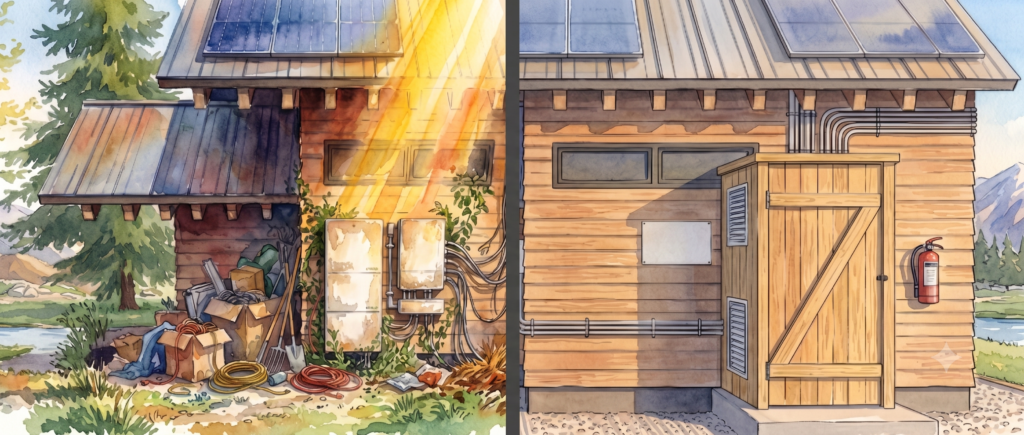
- Eliminate Direct Sunlight: An outdoor battery enclosure should never sit in direct afternoon sun. If wall-mounted outside, ensure it is installed under an eave, on a north- or east-facing wall, or protected by a dedicated solar shade cover.
- Clear the Clearance Zone: Passive and active cooling systems rely on open airflow around the cabinet. Maintain at least 12 inches of clear space on all sides—never stack lawnmowers, boxes, or sports gear against the enclosure.
- Manage the Garage Climate: Garages can turn into hot boxes in mid-summer, frequently reaching 110°F+ even if it’s 95°F outside. If your battery is garage-mounted, consider adding a solar-powered gable vent or keeping windows/vents cracked during high heat.
- Shift High-Load Charging: If your time-of-use schedule permits, avoid heavy grid charging or rapid discharging during the hottest hours of the afternoon. Discharging at a steady pace in the cooler evening keeps internal cell temperatures significantly lower.
Next week we’ll continue our summer series with discussions about the types of physical damage solar panels often take, how to address it, and most importantly how to avoid that damage all together.