
Solar panels are built to endure harsh weather, but over time, invisible stress can quietly degrade their performance. Three closely linked phenomena—thermal shock, micro-cracks, and hotspots—are leading causes of permanent solar panel damage and efficiency loss.
Understanding how these issues develop gives homeowners the leverage to protect their panels and maximize energy output for decades.
The Chain Reaction: Micro-Cracks, Thermal Shock, and Hotspots
To prevent solar panel damage, it helps to understand how these three factors interact:
- Micro-Cracks: Microscopic fractures in silicon wafers often form during manufacturing, shipping, or installation. While invisible to the naked eye, they interrupt the flow of electricity within the solar cell.
- Thermal Shock & Cycling: Rapid temperature changes (such as spraying cold water on scorching panels) or daily expansion and contraction cause silicon wafers to flex. Over time, thermal stress forces hairline micro-cracks to widen and propagate across the cell.
- Hotspots: When a micro-crack isolates a section of a cell, electrical current struggles to pass through. Instead of converting sunlight into electricity, the damaged area acts as a resistor, converting power into extreme heat. These localized high-temperature zones—known as hotspots—can scorch the backsheet, melt soldered connections, and cause permanent module failure.
How Homeowners Can Prevent System Degradation
Preventing these issues comes down to minimizing mechanical stress, preventing rapid temperature swings, and ensuring proper air circulation.
- Rapid Thermal Shock – Never spray cold water on hot panels. If cleaning panels yourself, wash them early in the morning or near sunset when the surface temperature is low.
- Overheating & Resistance – Ensure airflow underneath. Maintain a proper gap (at least 4–6 inches) between the roof surface and solar panels to allow heat to dissipate naturally.
- Shading-Induced Hotspots – Keep panels clear of debris. Leaves, bird droppings, or heavy soil build-up shade specific cells, forcing adjacent cells to work harder and generate intense heat.
- Mechanical Stress Cracks – Avoid physical impact. Never walk on solar panels, lean heavy equipment against them, or drop tools during roof maintenance.
How to Spot and Address Existing Issues
Because micro-cracks and early hotspots aren’t easily visible from the ground, tracking system performance and knowing when to call a professional is key.
- Monitor Daily Performance Trends: Use your system’s monitoring app (like Enphase or SolarEdge) to look for unexplained drops in output from specific panels.
- Conduct Visual Inspections: Check safely from the ground for discoloration, burn marks, or browning on panel glass or backsheets.
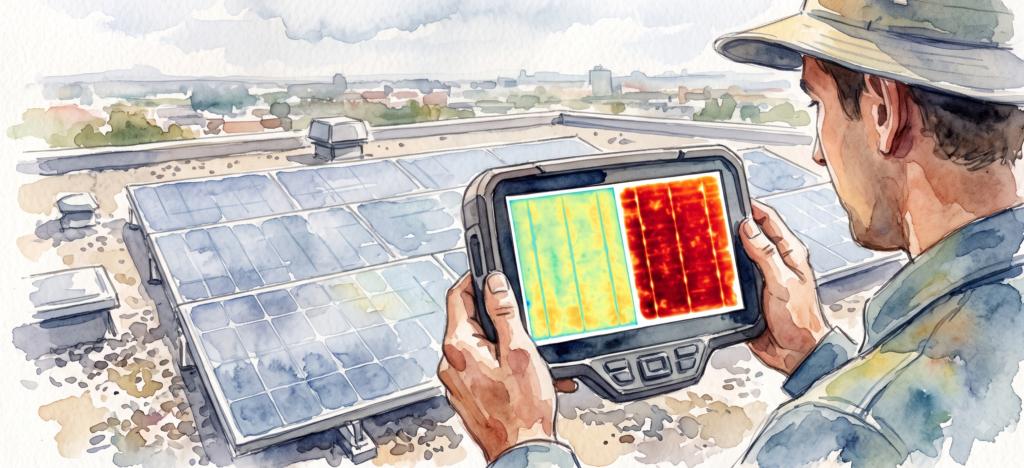
- Schedule Professional Thermography: Certified technicians can inspect your array using infrared (thermal) cameras or electroluminescence (EL) imaging to instantly pinpoint internal micro-cracks and hotspots before they turn into fire hazards or full system failures.
- Leverage Panel Warranties: Most tier-1 panels carry a 25-year performance warranty. If a hotspot or manufacturing defect drops output significantly, contact your installer to claim a warranty replacement.