
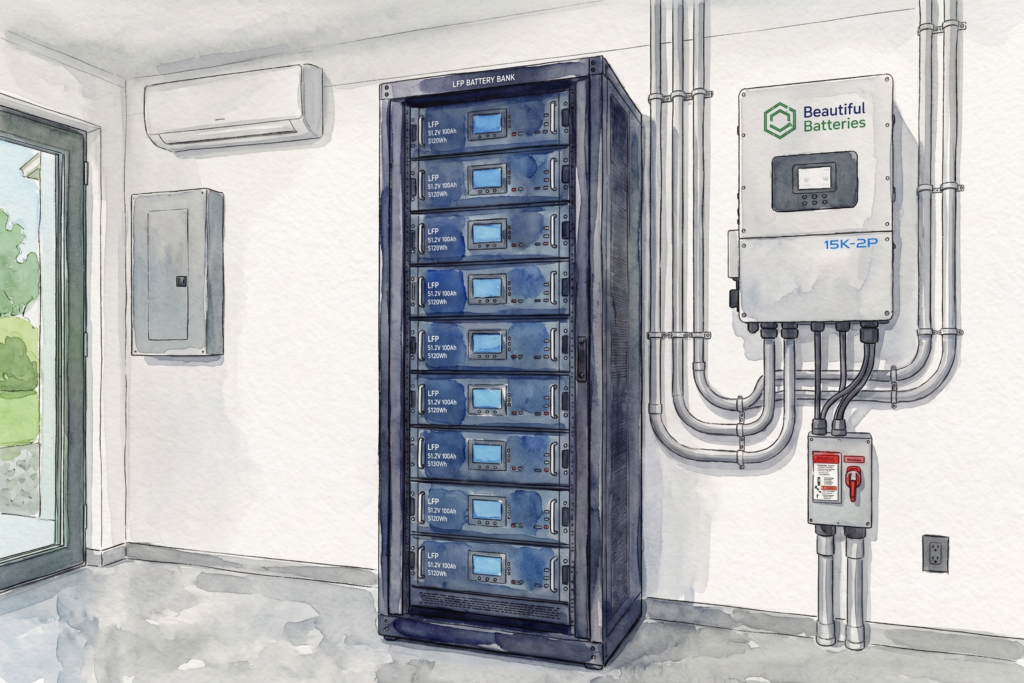
For rural New Mexico properties securing a reliable power supply is a unique challenge. Long distance utility lines are vulnerable to lightning strikes, high winds, and heavy winter snows. To protect their homes, rural property owners typically look to two main storage strategies: Hybrid Grid-Tied Systems or True Off-Grid Systems. Selecting the ideal setup requires balancing upfront infrastructure investments against total self-reliance.
Weighing the Options: Grid-Tied Battery vs. Pure Off-Grid
Each path presents unique operational trade-offs for high-desert living:
- Hybrid (Grid + Battery Storage)
- Pros: Homeowners gain continuous grid backup while keeping the ability to sell surplus power back via Net Energy Metering (NEM), assuming the utility company accepts this arrangement. If your solar panels experience multiple cloudy winter days, you can seamlessly pull cheap energy from the utility. This safety net means your physical battery bank can be sized smaller, lowering initial project costs.
- Cons: You remain tied to the utility company, meaning you must pay mandatory monthly grid-connection fees and are subject to regulatory rate hikes.
- True Off-Grid
- Pros: Complete elimination of monthly electric bills and absolute insulation from utility grid failures or regional brownouts. There is no utility interconnection paperwork, permission-to-operate waiting periods, or regulatory red tape.
- Cons: High initial capital investment. Because you are your own utility power plant, the solar array and battery bank must be heavily over-sized to sustain the home through consecutive storm days. A fossil-fuel automated backup generator is almost always required as a tertiary safety measure.
Lithium Iron Phosphate: The Latest and Greatest in Energy Storage Technology
Every year renewable energy technology manufacturers inspect and push their products to do more than they could before, and one of the newest and most exciting developments in home energy system tech is the introduction of Lithium Iron Phosphate (LFP) batteries into the consumer market.
These new kinds of batteries are entirely different from more commonly used Nickel Manganese Cobalt (NMC) or Nickel Cobalt Aluminum (NCA), and are an especially tall upgrade from old-school lead-acid batteries. LPF batteries last twice as long as older kinds of batteries, are much more resistant to physical and heat damage, pose significantly less fire risk, offer more usable energy per charging cycle, and the maintenance costs over the life of the battery don’t even compare to older models.
If you’re looking to install a new battery bank or replace your existing backup system, consider the investment into LFP batteries for long-term peace of mind as the benefits of the new technology blow the old models out of the water!
Proactive Actions to Optimize Your Battery Bank
A battery storage system represents a significant financial asset. To maximize its operating lifespan and operational efficiency in New Mexico’s severe thermal climate, homeowners should take several proactive measures:
- Enforce Temperature Controls: High-desert weather features massive diurnal temperature swings. Batteries should be installed in insulated, semi-conditioned spaces (such as a garage or utility basement) rather than an uninsulated shed. Extreme cold reduces temporary charging capacity, while extreme heat accelerates overall cell degradation.
- Implement Smart Load-Shifting: Program heavy appliances—such as high-volume well pumps, electric water heaters, and livestock tank heaters—to cycle during peak midday sunlight. Consuming solar energy directly as it is generated protects your battery bank from unnecessary depth-of-discharge cycles, preserving its long-term cycle life.
- Establish Critical Load Panels: Separate your vital electrical circuits (well pumps, refrigeration, medical equipment, and internet) from luxury loads into a dedicated backup sub-panel. If an outage stretches across multiple cloudy monsoon days, this targeted design ensures your essential systems outlast the storm.
By prioritizing local ambient variables and modern lithium chemistries, rural New Mexico homeowners can safely convert the intense high-desert sun into a reliable shield of permanent energy independence.