
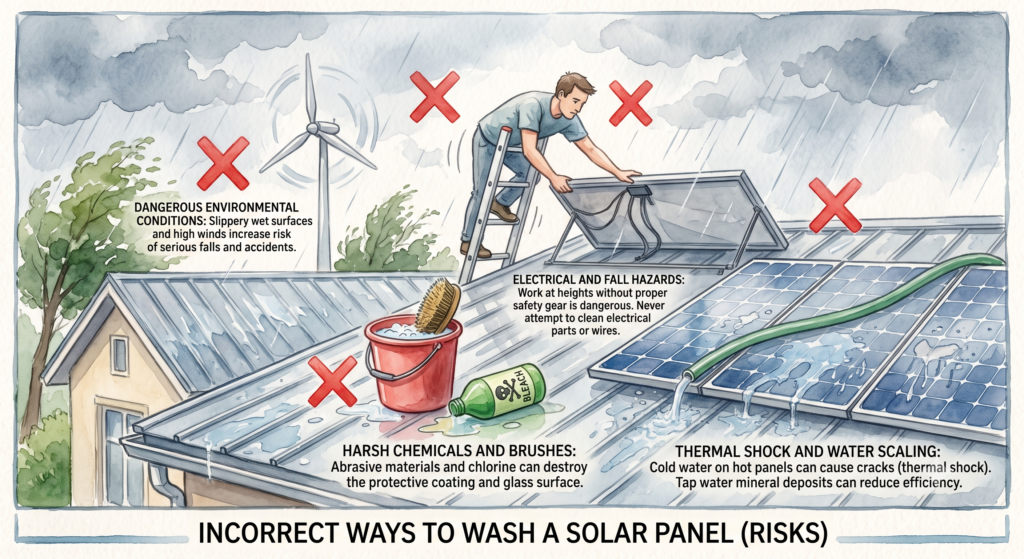
When it comes to engineering outdoor utility equipment, durability and self-sufficiency are paramount. In the high deserts of Northern New Mexico we have a different set of considerations to keep in mind when it comes to maintaining our solar arrays for the longest life and return on our investment. Besides the typical dust accumulation, we also have to contend with high elevations, severe mineral scaling, intense solar radiation, and extreme temperature swings.
Each of these topics affects your panels differently and has different steps to address them, so we’ll cover them one by one.
1. The “Hard Water” Nightmare (Calcium & Mineral Scale)
The water in Northern NM is notoriously hard, packed with high concentrations of dissolved minerals like calcium and magnesium.
- The Danger: If you spray your panels with a standard garden hose and let them air-dry in the high-desert sun, the water will evaporate instantly, leaving behind a white, crusty sheet of calcium scale (efflorescence). This mineral film blocks light far worse than normal dust and is incredibly difficult to remove once it bakes onto the tempered glass.
- The Rule: Never use raw tap or well water. You must use distilled water or a deionization (DI) water filtration system. Deionized water acts like a magnet for dust and dries completely spot-free without leaving a mineral residue.
2. High Altitude and Extreme Thermal Shock
At 7,000+ feet of elevation, the atmosphere is thinner, meaning the sun’s UV rays are intense and panels get incredibly hot, incredibly fast.
- The Danger: If you spray cool water onto a panel that has been baking in the high-desert sun, you risk causing thermal shock. The sudden temperature drop can instantly shatter the tempered glass or cause micro-fractures in the internal silicon cells, completely ruining the panel.
- The Rule: You have a very narrow window to wash panels safely in the summer. You must do it at dawn (before the sun hits the array) or late in the evening after the panels have completely cooled down.
3. The Northern NM “Soil Composition” (Caliche and Pine Pollen)
The dust in Northern New Mexico isn’t standard topsoil; it’s a mix of fine, abrasive desert sand, alkaline caliche dust, and sticky spring/summer resin from Pinon and Ponderosa pines.
- The Danger: If you scrub dry panels with a brush, the coarse sand particles will act like sandpaper, scratching the anti-reflective (AR) coating engineered onto the panel glass. Scratches permanently degrade the panel’s ability to absorb light. Furthermore, pine resin acts like glue, binding the dust to the glass.
- The Rule: Always start with a gentle, low-pressure rinse using your DI water to flush away the loose abrasive sand before touching the glass with a tool. To tackle sticky pine resin, use a soft microfiber solar squeegee or a specialized rotating solar brush. Never use abrasive pads, steel wool, or harsh household chemicals (like Windex or bleach), which can strip the AR coating.
4. Physical Safety: Metal Roofs and High Winds
Many properties in Northern NM feature pitched pro-panel (metal) roofs, which become incredibly slick when wet. Additionally, regional wind patterns (like the afternoon winds rolling off the Sangre de Cristo mountains) can pick up without warning.
- The Danger: Slipping on a wet metal roof or getting knocked off balance by a sudden 30 mph gust of wind.
- The Rule: If your system is roof-mounted, safety is paramount. Use a telescoping extension pole so you can clean the panels safely from the ground or from a secured ladder. If you must get on the roof, wear a safety harness and high-traction footwear, and never wash panels on a windy day.
🛠️ Your Northern NM Solar Washing Checklist
If you decide to tackle this yourself, here is the exact equipment and process suited for the region:
| Component | What to Use / Do | What to AVOID |
| Water Source | Deionized (DI) or Distilled water | Raw hose water / Well water |
| Cleaning Tools | Soft microfiber solar mop or squeegee | Pressure washers, harsh plastic bristles |
| Timing | 6:00 AM – 8:00 AM (Cool glass) | 10:00 AM – 5:00 PM (Peak sun) |
| Chemicals | Pure water only (or specialized solar soap) | Dish soap, Windex, bleach, vinegar |
💡 Pro-Tip for Our Climate: Because Northern New Mexico gets very little rainfall through the late spring and early summer, “soiling losses” can easily sap 10% to 15% of your system’s efficiency by August. A single, proper washing in mid-summer (right after the spring wind/pollen season ends) is usually all it takes to keep your system optimized for the year, though.