
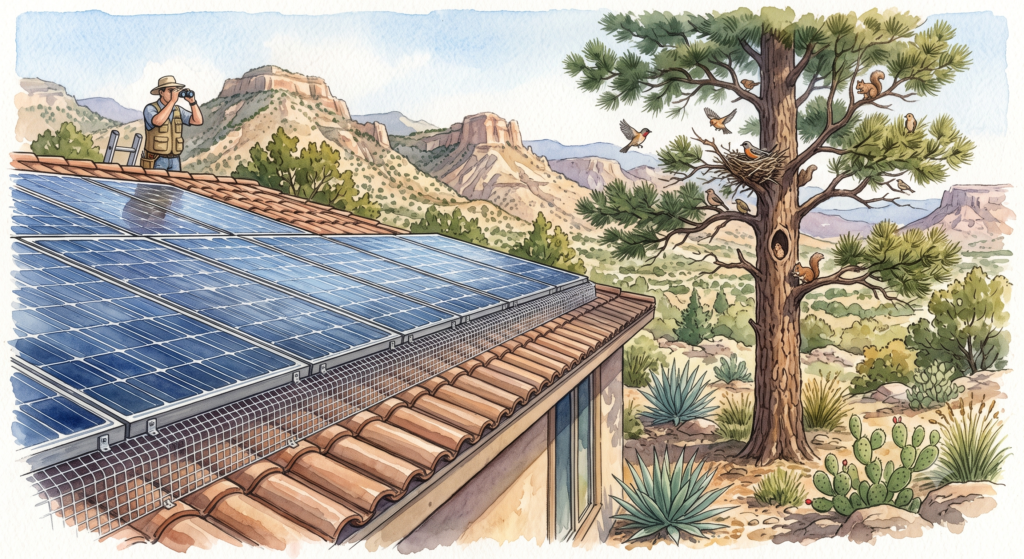
We’ve established at this point that your solar energy system needs light to thrive, not heat! With the inverter addressed, let’s check back to the solar panels and inspect a detail you may not have noticed before: the solar panels don’t lay flush against the roof. All solar panels should be tilted for the optimal path of the sun throughout the day (that’s called the tilt angle and the azimuth angle, and this is custom on every installation site), but that’s not what that gap is for.
This 4-6 inch gap is called the Convective Gap and is engineered into the installation and normal function of the panel. Instead of mounting the panel flush to the roof – trapping air underneath the solar panel that will reach blazing hot temperatures under glass quickly in the full sun – the gap allows the air to move, escape, and cool the solar panel as the air naturally moves from hotter, higher pressure to colder, lower pressure. Think of it as a built-in cooling system that works by literally just giving the panel itself room to breathe away from your roof.
As we mentioned in a previous article, when your solar panels start to get much hotter that 77℉ it begins to encounter more resistance and generates less electricity that can be put into your system. This isn’t the only danger, though, as that same heat breaks down the physical components in your panels over time – leading you to have to replace it sooner. With this in mind, it makes sense why this gap is already taken into consideration when engineers design these solar panels.
Maintaining the Convective Gap
Knowing that we need to maintain this gap and the airflow in it for the long-term health of our panels, let’s go over some items you can check for to make sure your system is maintained and running smoothly for years:
- Inspect your panels regularly: You don’t have to do it necessarily often, but after any major change in the weather, any incident where your panels may have been affected (such as an odd drop or jump in your monitoring graphs), or just once or twice a month to make sure all is well. A visual inspection is usually all that’s required. Always be careful when getting up in high places like your roof – instead of getting on a ladder, consider using a telescopic pole and camera to verify the convective gap is clear of debris or animal nesting material. Thermal cameras can even indicate unrelated, dangerous electric “hot spots” without getting close to the array at all as long as the camera has direct line-of-sight.
- Clean your panels gently: Clear your panels with a cordless leaf blower from a safe platform or from the ground with a telescopic pole and attachment. If the debris is wet and packed tight under the panels, loosen it with a gentle stream of water from a garden hose (run the stream down the roof from the very top – don’t spray your hot panels with cool water unless you want an expensive repair!) and then use a specialized soft-bristle brush attachment to pull or push the debris toward the edges of the array.
- Warning! NEVER use a pressure washer to clean your solar panels or any of the surrounding components. The pressure of the washer is so high that it will likely damage the delicate components and films, completely destroy your panels, and immediately become a fire hazard!
- Also, never use your hands or limbs to clear debris under a solar panel if it can be helped. You can knock loose sensitive equipment, displace wires, or even cause harm to yourself (the most important part) getting under the arrays – particularly on the roof. Always use a cleaning tool that’s safe to use around electrical equipment.
- Prevention as cure: You can prevent debris from building up around your panels with protective screens – often called critter guards or pest meshes. These screens clip to the framing of your panels and provide a barrier to birds, rodents, and other small animals that might find your solar array a cozy place to live. These barriers still need to be inspected and cleaned on occasion, but they prevent a lot of the maintenance of needing to clean under your panels. You should also make sure you have a 10ft tree clearance all the way around your solar panels. This keeps debris from falling directly into the no-go zone on top of and under your panels.
The convective gap is more than just decorative or empty space, it has a purpose and function: to keep your solar panels running smoothly and efficiently by managing thermal stress. Speaking of thermal stress, going too quickly from cold to hot or hot to cold can be catastrophic for your panels, the system they rely on, and your wallet. In our next article, we’ll continue our discussion about best practices and ways to clean your solar panels yourself without accidentally making an expensive mistake!