
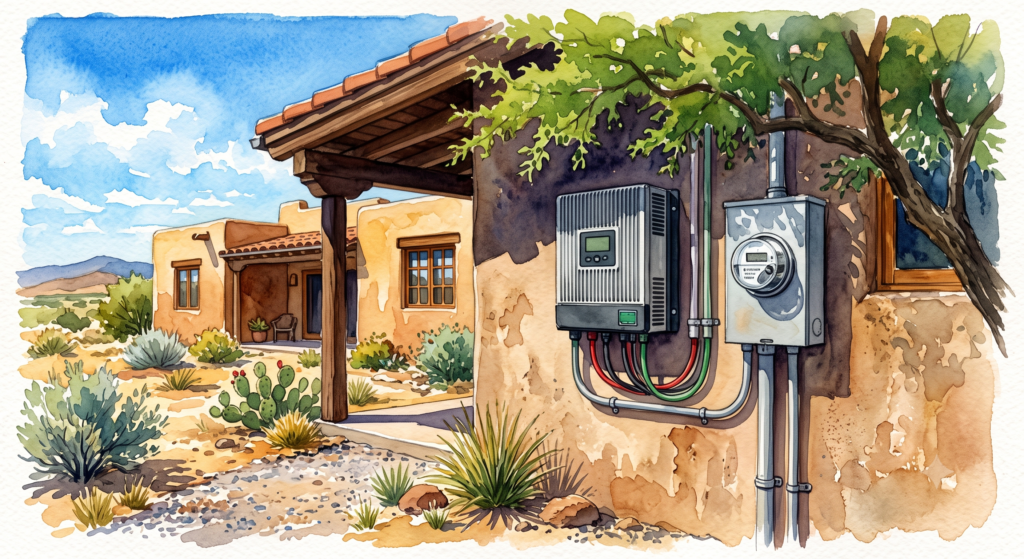
Thermal Derating is basically your solar inverter’s way of taking a “safety break” when it gets too hot. Think of the inverter as the brain of your system—it’s the box that converts the raw energy from your panels into the power your home actually uses. When this “brain” senses it’s overheating, it automatically slows down (or “derates”) its power output to protect its delicate internal electronics from permanent damage. While most inverters are built to handle outside temperatures up to 125°F, they create their own internal heat while working. If they can’t cool down, they’ll throttle their performance to stay safe.
While this self-protection is great for your hardware, it can feel like a “hidden thief” stealing your solar production. Here are the three main ways this impacts you:
1. Midday “Clipping” and Lost Savings
This usually happens right in the middle of the day when the sun is brightest. Just when you should be making the most energy – or even money if you have a Power Purchase Agreement with your utility provider – your inverter hits its heat limit and caps your production. Instead of a nice peak on your energy graph, you’ll see a flat line or a “sag” right when electricity rates are often at their highest.
2. The “Double Whammy” Effect
It’s a bit of a compounding problem: your solar panels already lose some efficiency just from being hot. If your panels are down by 15% and then your inverter slashes another 20% to stay cool, your total system output takes a double hit.
3. Extra Wear and Tear
Heat is the number one enemy of electronic parts like capacitors (components that store energy). While derating saves the inverter from breaking immediately, running at the absolute limit every summer can age the hardware prematurely, potentially leading to a full replacement sooner than expected.
How to Keep Your System Cool
The good news is that thermal derating is usually caused by how or where the system is installed, which means there are several simple ways to fix or prevent it:
Easy Solutions and Strategies
- Give it some shade: If your inverter is baking on a south-facing wall, moving it to a north-facing side or inside a well-ventilated garage is the best fix. If moving it is too pricey, even a simple awning or “sun hat” for your inverter can drop the temperature by 10-15°F.
- Let it breathe: Inverters need airflow to shed heat. Make sure there’s at least 12 inches of clear space all around the box. If it’s in a garage, a small exhaust fan can help keep the air moving.
- Plan for the heat: If you’re designing a new system in a hot area, you can “oversize” the inverter. This means using an inverter with a slightly higher capacity than your panels, so even if it throttles slightly, it still handles everything your panels are producing.
If you missed last week’s focus on how your solar panels handle the heat, check out part one of this series on how to help your system beat the heat!