
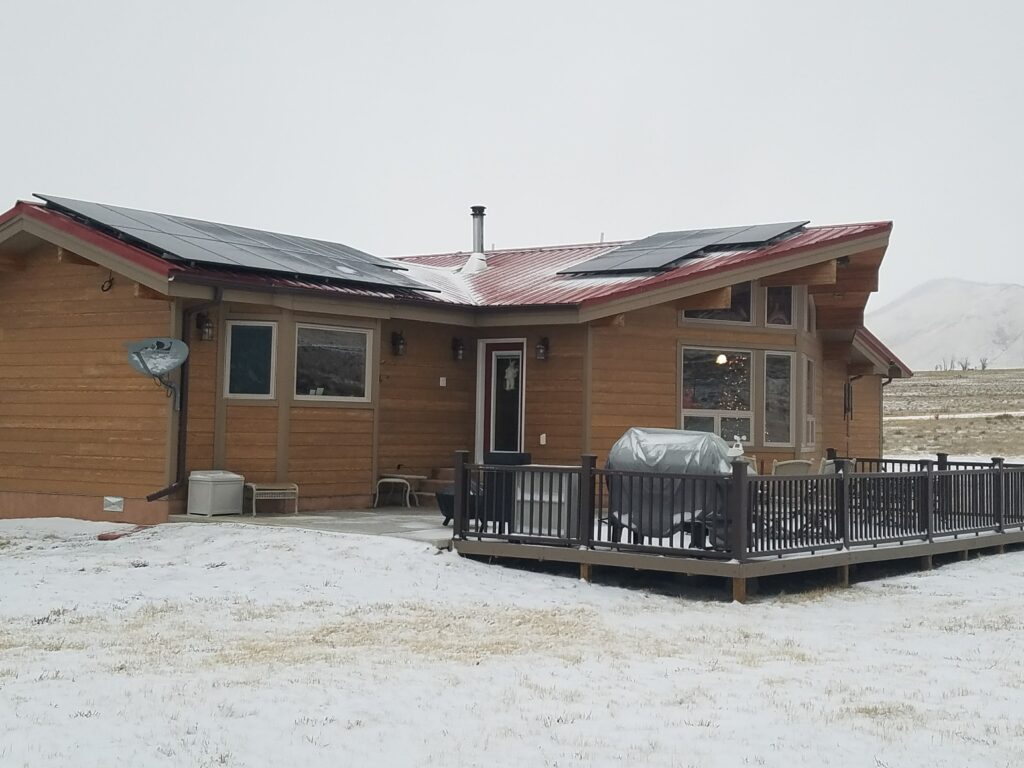
The New Mexico monsoon season, typically running from June through September, brings much-needed moisture to the high desert—but it also packs a punch with violent lightning, microburst winds, and sudden hailstorms. For solar homeowners, these dramatic weather shifts often spark concern: can a system built to soak up the sun survive a pounding from the sky?
Engineering vs. The Elements
Modern solar panels are significantly tougher than they look. In fact, in inclement weather, your roof and car will likely sustain more damage than your solar panels! Most tier-one panels installed by ECC Solar are engineered to withstand extreme conditions common to New Mexico.
- Hail Resistance: High-quality panels are typically tested to withstand one-inch hailstones (roughly the size of a golf ball) traveling at speeds over 50 mph. In our 30 years of service, ECC Solar has only ever seen two storms bad enough that systems had to be replaced – and the clients’ homeowner’s insurance covered it!
- Wind Loading: High-desert winds during monsoons can reach 60–80 mph in sudden bursts. Professional installation is key here; ECC Solar utilizes robust racking systems designed to meet local wind-load requirements, ensuring panels stay anchored to the roof or ground mount even during intense updrafts.
Proactive Steps for Homeowners
While the hardware is durable, monsoons present secondary risks. Here is how you can proactively protect your investment:
- Post-Storm Inspections: After a major hailstorm, do a visual check from the ground. Look for “spider-web” cracks in the glass. Even if the panel is still producing power, a crack can allow moisture to seep in, leading to “hot spots” or system failure later.
- Monitor Your Output: Use your monitoring app to check for sudden drops in production. If one string of panels is underperforming compared to the others after a storm, it may indicate internal cell damage from wind vibration or hail.
- Trim Nearby Foliage: Monsoon winds often snap dead branches. Ensure any trees near your array are trimmed back to prevent them from becoming projectiles that could crack a panel.
- Verify Insurance Coverage: Most New Mexico homeowners’ policies cover solar panels as a “permanent attachment” to the dwelling so they can be covered as part of your overall policy and not need their own, separate coverage. Before the season peaks, confirm that “hail and wind” are covered perils under your specific policy.
The ECC Solar Advantage
With over 30 years in New Mexico, ECC Solar understands that weather resilience starts with the design. By choosing hardware with superior glass thickness and reinforced frames, they minimize the risk of micro-cracks—invisible fractures that can spread over time like a windshield chip.
If you do suspect damage after a particularly nasty storm, ECC Solar’s service team can perform professional diagnostic checks, including thermal imaging, to ensure your system remains safe and efficient. By taking these proactive measures, you can enjoy the cooling rains of the monsoon season without worrying about the power of the storm.